
noviembre 20, 2025
Designing for Living
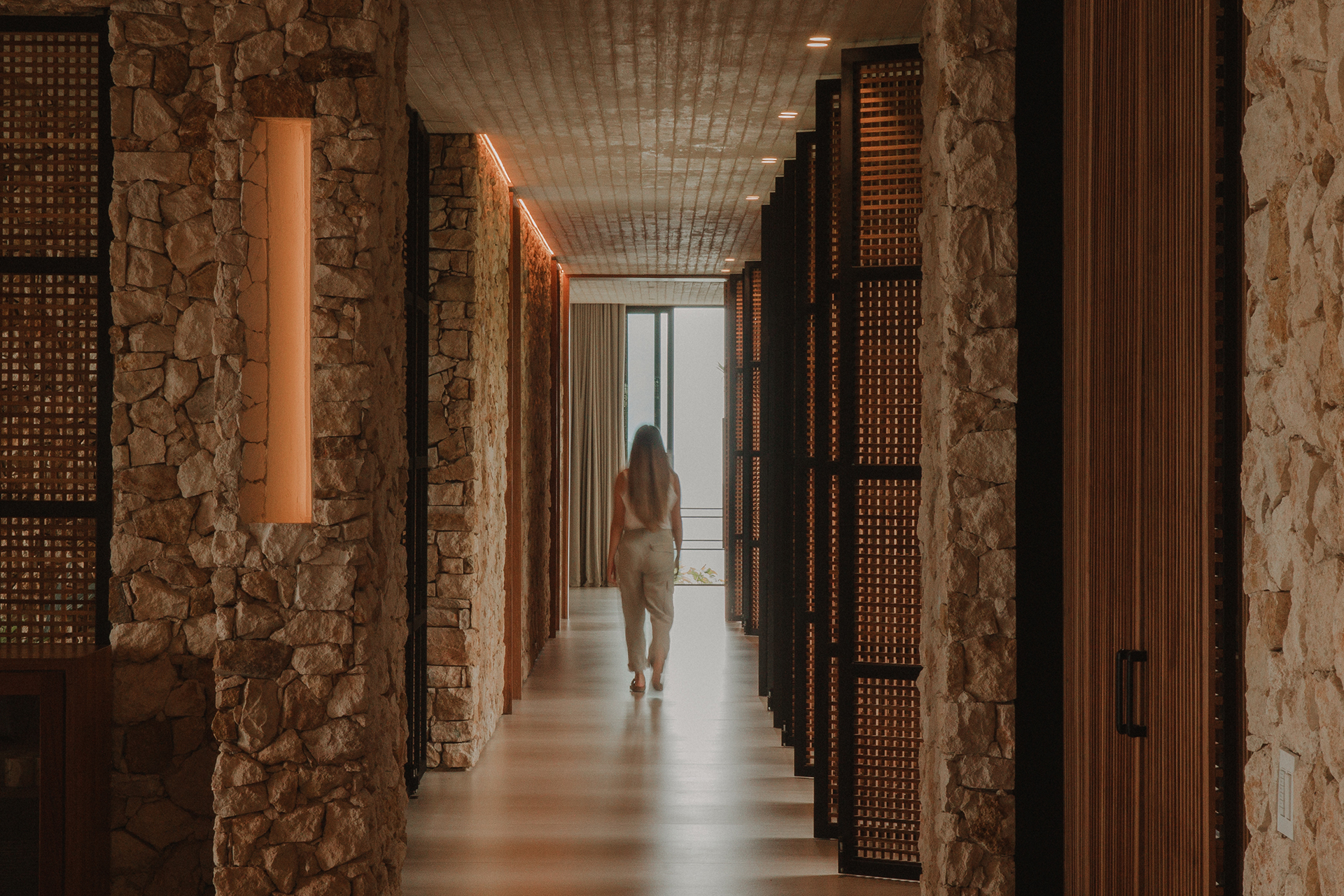
Designing for Living: Architecture that Dialogues with Its Surroundings
Designing is not just shaping forms, but reading the territory. Every place holds an invisible logic that guides architecture: the direction of the wind, the path of the sun, the sound of water, the texture of the earth. Understanding this memory of the landscape is the starting point for creating spaces that do not impose themselves, but integrate with sensitivity.
“The environment is not a backdrop; it is a dialogue partner. Architecture finds meaning when it learns to listen.”
In contemporary practice, context-aware design transcends aesthetics and becomes an ethical stance. It is not only about respecting the landscape, but establishing an active dialogue with it. Every chosen material, every orientation, every opening responds to a continuous conversation between the work and its immediate surroundings.
To inhabit, then, does not mean to occupy a space, but to coexist with it. The architectures that endure are those that recognize the power of place and adapt to its rhythm. A roof can become shade; a wall, shelter from the wind; a void, a breath for the interior.
Design that understands nature as an ally rather than an obstacle generates a quiet, almost inevitable beauty. Architecture becomes landscape, and the landscape, in turn, becomes an essential part of the experience of inhabiting.
In this balanced interaction between the built and the natural, an essential truth emerges: good architecture does not seek to stand out, but to belong. Designing for living is, ultimately, an act of humility before the environment.